
Ask any Kentucky hunter about their toughest season, and you’ll hear stories of freezing mornings, sudden rain, and that one old buck who seemed to spot every blind except the right one.

Ask any Kentucky hunter about their toughest season, and you’ll hear stories of freezing mornings, sudden rain, and that one old buck who seemed to spot every blind except the right one.
Disclaimer: All prices are subject to change, always do your due diligence on verifying price for any hunting blinds.
Ask any Kentucky hunter about their toughest season, and you’ll hear stories of freezing mornings, sudden rain, and that one old buck who seemed to spot every blind except the right one. Around here, the weather can shift in an hour, and so can your luck.
That’s why the blind you choose isn’t just gear; it’s your partner for every hunt.
At R&M Fence, we understand what local hunters need. That’s why we offer premium Redneck Hunting Blinds, designed for comfort, serious concealment, and year-after-year durability. If you want the upper hand this season, you need the best equipment for Kentucky’s wild swings.
Looking for the top Hunting Blinds in 2026? This blog will reveal our three favorites for every style and setup.
Picking a hunting blind can shape your entire season. With Kentucky’s shifting weather and unpredictable game, it pays to match your blind to the way you hunt and the animals you’re after.
Start with how you hunt. Bowhunters, rifle hunters, and crossbow fans all have different needs.
A bowhunter needs extra space to draw quietly and may prefer a blind with vertical windows. Rifle and crossbow hunters might focus more on shooting lanes or a higher vantage point.
Think about your approach, too. Are you the kind of hunter who likes to move and change locations? Lightweight, portable blinds make it easier to adapt and stay on fresh signs. If you prefer a permanent setup, a sturdy box blind can withstand the elements and give you an advantage all season long.
A larger blind gives you a lot of room. More space means you can bring along a camera for filming, extra gear, or even a young hunter learning the ropes. You’ll appreciate the room when long sits turn into hours, especially during Kentucky’s colder months.
Comfort matters. Extra headroom lets you stand and stretch. Padded chairs, carpeted floors, and good ventilation all add up to a blind you won’t mind spending sunrise to sunset inside.
Staying hidden is about more than just color. A quality hunting blind helps with scent control and noise reduction. The right materials cut down on flapping fabric or creaks that can alert game.
Blending into your surroundings is key. Match your camo pattern to your local landscape, whether it’s hardwoods, open fields, or river bottoms. The right blind can make you invisible to deer, turkeys, and anything else you’re tracking this year.
Kentucky seasons ask a lot from your setup. Cold snaps, rain, shifting winds, and wary deer can turn a good spot into a tough sit. To help you stay comfortable, concealed, and ready, R&M Fence has compiled the best Hunting Blinds in 2026 for local conditions. Below is our top fiberglass pick, chosen for space, build quality, and quiet operation.

A true big-room blind built for all-day sits and all-season toughness.
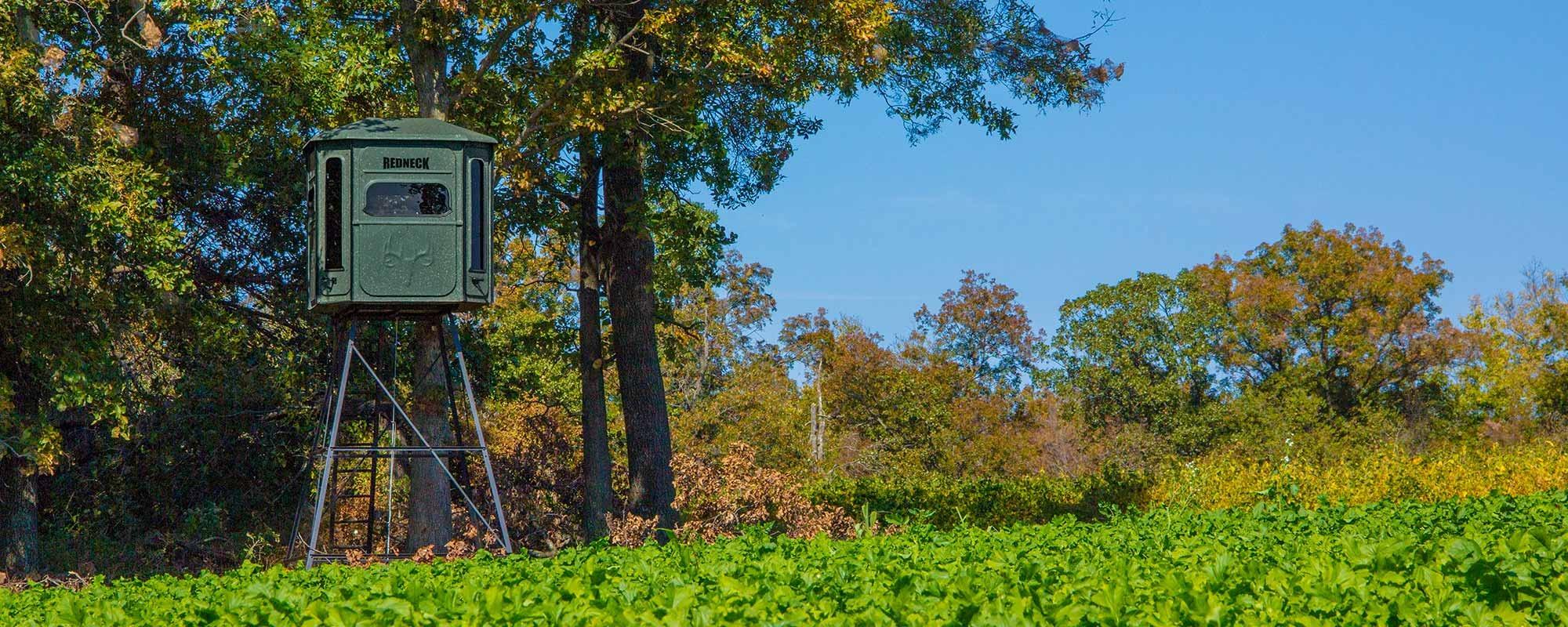
The Game Changer 6×8 is a large box blind, with room for three to four adults, a camera rig, or a mentor and youth hunter. It’s easily the best fiberglass hunting blind in 2026. Bow, crossbow, or rifle shooters get full coverage with tall vertical corner windows and oversized horizontal windows that create panoramic visibility.
This model adds one-piece automotive-style window gaskets for quieter openings and better scent and moisture control.
Inside, closed-cell foam in the ceiling, acoustical foam on the walls, and a padded, marine-carpeted floor help deaden sound and hold heat. Large tinted, tempered automotive-glass windows maintain concealment while keeping views clear in rough weather.
The Game Changer 6×8 has outstanding durability. The fiberglass shell carries a gel-coat finish and is built in the USA. Redneck backs fiberglass blinds and powder-coated stands with a limited warranty for the original owner up to 25 years.
For planning and placement, note the size and weight.
Interior dimensions are about 70 inches wide by 94 inches deep by 80 inches high, with an exterior footprint of roughly 77 by 100 inches and a weight of about 550 pounds.
The Game Changer 6×8 requires a support bracket on elevated stands and is not available on a 15-foot stand. Installation typically needs equipment such as a skid steer or telehandler.
Shop Fiberglass Hunting Blinds at R&M Fence
Want help matching a blind to your property, stand height, and access plan? R&M Fence can recommend placement and handle safe installation.

This low-profile, camo-skinned blind slides right into your setup, wrapping you in 360 degrees of concealed movement, thanks to a textured ghillie camo that melts into fields, edges, and stands of hardwood.
The tough, double-stitched 600-denier ghillie drape of the Soft Side Ghillie 6×6 blind hugs a rugged, powder-coated steel skeleton that pipes together in 35 to 45 minutes, giving you hardcore structure without locking you to a permanent spot.
Slip inside the octagonal hub and you’ve got clear shot lanes balanced with four tall vertical panels for bows and three extended horizontal panels cut for rifles and crossbows.
Linked curtain mesh slides silently and the layouts use slide-track tabs, not zippers, so you can draw or mount in peace. Total weight is about 133 pounds, and the camo layer strips off for compact off-season tuck.
The Soft Side Ghillie 6×6 blind ships with tuned extras. Soft-tint, see-through mesh runs on quiet glide, you score a blind bow hanger, a quick-drop gun holder, and two 24-inch rebar pegs to hold the blind steady.
The doorframe and interior height meet the needs of average-to-tall shooters, opens wide to a full 36 inches for wheelchair access, and interior height lifts enough to hang a bow securely.
When you want to slide the blind 15 feet in the air later, a range of brackets and platforms are on the shelf, and the steel skeleton stays outside all year while the camo slips off and tucks into storage.
Shop Soft Side Hunting Blinds at R&M Fence

This portable ground blind for deer vanishes in open country where traditional box blinds stand out. The heavy-duty burlap cover carries a natural, field-worn look that pairs well with stubble and harvested crop rows.
Set it on the edge of a cut cornfield, tuck it along a hedgerow, or place it near a pinch point between food and cover. Deer and turkey read it as another bale in the field, which helps you get inside bow range without drawing attention.
This weatherproof box blind uses powder-coated steel for strength and season-after-season reliability. The burlap cover includes UV resistance and a water-resistant backing, so it holds color longer and sheds light rain.
You can remove the cover quickly for storage when the season ends, then reinstall it next year in minutes. That simple routine extends the life of the fabric and keeps the blind looking like it belongs in your field.
Window placement supports both archery and firearms. The shoot-from openings create low-profile angles across field edges and travel corridors, and the two-door design makes entry fast and quiet.
Because the Outfitter Burlap Bale Blind sits low and blends with agricultural scenery, it works especially well for ground-level encounters with pressured deer that avoid elevated silhouettes.
Mobility is a major advantage. The bale profile makes it easy to reposition between seats as food sources shift or wind direction changes. Many hunters slide it short distances by hand or use a simple sled or ATV for longer moves.
For best concealment, brush in the base with surrounding stubble, scatter a few loose corn stalks, and avoid trimming the field edge too clean.
Keep the interior tidy to cut scent and noise. Consider a small floor mat, a quiet chair, and a pack hook to keep gear off the ground. On cold mornings, a portable heater used with caution takes the edge off without adding bulk to your setup.
Shop Bale Hunting Blinds at R&M Fence
Getting the most from your hunting blind means more than picking the right model. Careful planning and regular upkeep can make a huge difference in your success each season. Here’s how to make every dollar and effort count.
Where you place your blind often matters as much as which blind you choose. The best spots are close to natural food sources, travel corridors, or water. Look for well-worn game trails, edges of fields, or spots where deer and turkey like to feed at dawn or dusk.
Scout your land early and watch for animal movement before making your decision. Use trail cameras to confirm activity. Avoid obvious locations that leave you exposed or put you upwind of where game travel. The right placement helps you stay hidden and increases your chances of seeing more action every time you hunt.
Don’t wait until the night before opening day to set up your blind. Installing your blind weeks in advance gives local wildlife time to get used to the new shape and scent in their territory. Over time, deer, turkey, and other game will start to ignore the blind as just another part of the landscape.
Trim nearby brush to clear shooting lanes and improve visibility, but don’t overdo it. You want your blind to blend naturally, not stick out. If possible, set up your blind in late summer or early fall, when game patterns are starting to settle.
A well-maintained blind lasts longer and performs better. At the end of each season, thoroughly clean the inside and outside. Remove mud, debris, and any food wrappers or gear. Inspect seams, doors, windows, and anchors for wear or damage. Make repairs as soon as you notice a problem.
If you use a portable or soft-side blind, always store it in a dry place when not in use. Folding it while wet can cause mold, mildew, and early breakdown. Even hard-sided blinds benefit from occasional cleaning and a coat of weather sealant to extend their lifespan.
A little attention throughout the year will protect your investment and ensure your blind is ready whenever hunting season returns.
The right accessories can turn a good blind into a great one. Once your blind is placed, these additions keep you comfortable, organized, and ready to shoot.
Shooting Rests and Gun Holders
A steady rest makes a real difference during long sits.
Window-mounted shooting rests clamp directly to your blind’s frame and give rifle and crossbow hunters a solid point of contact without having to hold full draw weight for minutes at a time.
The Soft Side Ghillie 6×6 ships with a quick-drop gun holder built in, but you can also add a second rest on the opposite window to give flexibility when game approaches from an unexpected direction.
Portable Heaters
Kentucky winters can drop fast.
A propane or catalytic heater takes the edge off without adding much bulk. Keep airflow in mind: crack a window slightly when running a heater inside any enclosed blind. A small carbon monoxide detector is worth a few dollars and peace of mind.
Scent Control Products
Even the best concealment fails if your scent reaches the game first.
Use scent-eliminating sprays on your clothing, boots, and gear before entering the blind. Activated carbon bags placed inside the blind between hunts absorb odors that build up over time. For the fiberglass Game Changer, the insulated walls already help contain scent; pair them with a spray routine and you have a strong advantage.
Folding Chairs and Seat Cushions
Comfort affects patience.
A quality folding chair with quiet fabric keeps you settled during slow periods. Look for chairs with rubber feet that won’t scrape against carpeted floors. In the Game Changer 6×8, you have room to bring two full-sized chairs; in the Soft Side 6×6, compact swivel seats maximize space without crowding.
Bow Hangers and Gear Hooks
Keeping your bow or rifle within reach without setting it on the floor reduces noise and keeps equipment clean. The Soft Side Ghillie includes a bow hanger. Adding extra gear hooks along the walls lets you hang a pack, range finder, or binoculars so everything stays quiet and off the ground.
Blind Mats and Floor Covers
A quiet floor is essential. The Game Changer comes with marine carpet already installed. For the bale blind or any ground setup, a foam mat or rubber-backed rug deadens footsteps and keeps the cold from seeping up through a bare steel floor.
Turkeys demand a different approach than deer, and the blind you use, and how you use it, matters just as much in the spring as in the fall.
Why Turkeys Are Harder to Fool
Whitetails rely heavily on smell; turkeys rely almost entirely on eyesight. A blind that conceals your movement is the single most important thing you can do. Any sudden motion inside a soft-sided blind, or a window cracked at the wrong angle, will send a gobbler the other direction.
Best Blinds for Turkey Hunting
The Soft Side Ghillie 6×6 is a natural fit for turkey setups. Its ghillie camo blends into field edges, open woods, and logging roads where gobblers like to strut. The zipper-free slide curtains let you adjust window openings a few inches at a time without the snapping noise that plastic zippers create at the worst moments.
The Outfitter Burlap Bale Blind also works well in open fields near food plots. Turkeys routinely walk within feet of hay bales without giving them a second look, which puts you inside comfortable shotgun or bow range.
Placement Tips for Spring Turkey
Set up within 50 yards of a roost or a known strutting zone. Face your primary window toward where the bird is likely to approach, keeping the morning sun at your back so you aren’t silhouetted. Use a hen and jake decoy combination placed 15 to 20 yards from the blind; turkeys focus on the decoy, not the blind behind it.
Brush in the base of your blind with nearby vegetation to break up the straight bottom edge. A bare-framed blind sitting on open ground, even with good camo, is more noticeable than one softened with a few downed branches or clumps of grass.
Inside the Blind
Wear full head-to-toe camo inside the blind, including a face mask and gloves. The interior of a blind appears bright to a turkey looking in through an open window. Avoid wearing white or light colors, and keep your movements slow and deliberate when the bird is within sight.
A hunting blind is one of the best tools for introducing younger hunters to the sport. The enclosed space removes some of the pressure of staying perfectly still in an open stand and gives a mentor the chance to coach quietly without spooking game.
Why a Blind Works Well for Youth Hunts
Movement inside a blind is forgiven in a way that an open tree stand never allows. A young hunter who shifts in their seat, adjusts their jacket, or leans over to whisper does not automatically blow the hunt. That margin makes the experience less stressful and more enjoyable for everyone.
The Game Changer 6×8 is the best option for mentor setups. Its 70-by-94-inch interior fits two full-sized chairs, packs, and a filming rig with room to spare. A young hunter can follow along with binoculars, watch the mentor work a call, and get a close look at game behavior before they ever take a shot.
Getting the First Shot Right
A blind with a solid shooting rest takes some of the weight off a young hunter holding a rifle for the first time. Set the rest before the hunt so they can practice swinging onto a target from a seated position. Walk them through the window angles so they know where the shot lanes are before anything walks in.
For young bowhunters, the Game Changer’s taller vertical windows allow a full draw from a seated or kneeling position without bumping the frame. Practice the draw inside the blind before the season so the motion becomes familiar.
Keeping the Experience Positive
Let the young hunter make the call on whether to shoot. A missed opportunity is better than a rushed shot that ends the day on a low note. Time in the field, watching deer feed or turkeys strut, builds the patience and read of animal behavior that makes a hunter for life. The right blind keeps both of you comfortable long enough for those moments to happen.
The height of your blind platform changes your shot angle, your sightlines over vegetation, and how much scent drifts toward game. Getting the elevation right for your property is as important as choosing the blind itself.
Common Stand Heights and What They’re Good For
| Stand Height | Best Use Case | Notes |
|---|---|---|
| 5 ft | Open flat terrain, food plots, field edges | Keeps scent low; good for rifle hunters with clear lanes |
| 10 ft | Moderate cover, brushy field edges, creek bottoms | Most common setup; clears most low brush and CRP grass |
| 15 ft | Dense hardwoods, hilly terrain, areas with heavy undergrowth | Maximum elevation for the Soft Side Ghillie; not available for the Game Changer 6×8 |
| Ground level | Bale blinds, soft-side ground setups, creek flats | Best concealment in agricultural fields; requires tight scent management |
Why the Game Changer 6×8 Has Stand Height Limits
At roughly 550 pounds, the Game Changer 6×8 requires a support bracket and is not rated for a 15-foot stand. The weight also means installation requires equipment, typically a skid steer or telehandler. For elevated placements above 10 feet, the Soft Side Ghillie is the better option since it can be mounted on compatible brackets and platforms from the Redneck lineup.
Shooting Angle Considerations
A 10-foot elevation creates roughly a 15- to 20-degree downward angle on game at 30 yards. That angle works well for rifle hunters and is manageable for crossbow and most bowhunters. Steeper angles at 15 feet require practice shots from elevation before the season to confirm sight settings and arrow flight.
For bowhunters specifically, a 5- to 10-foot platform keeps the shot angle forgiving and allows a cleaner double-lung opportunity on deer standing at typical encounter distances.
Platform Stability and Wind
Elevated blinds move in wind. The fiberglass Game Changer is heavier and more stable at lower heights; lighter soft-side blinds can flex noticeably in strong gusts at 15 feet. If your property sits on an exposed ridge or open hilltop, factor wind exposure into your height decision. R&M Fence can advise on bracket options and anchoring approaches based on your specific terrain.
A well-timed blind setup makes a measurable difference in your results. The goal is to have your blind looking like a permanent part of the landscape before the season opens, not a new object deer are still circling around in November.
| Timeframe | Task | Why It Matters |
|---|---|---|
| Late July to August | Scout food sources, trails, and water | Animal patterns set before summer heat breaks; early intel lasts into fall |
| Late August | Install trail cameras near candidate sites | 4 to 6 weeks of data before the season gives you reliable movement windows |
| Early September | Place permanent blinds (Game Changer) | Deer need 3 to 4 weeks minimum to accept a new structure in their range |
| Mid September | Place portable blinds (Soft Side, Bale) | Enough time to acclimate; can still adjust based on camera data |
| Late September | Brush in, trim shooting lanes | Final tweaks before the October opener; avoid heavy disturbance after this point |
| October opener | Hunt with minimal site intrusion | Limit access to entry and exit paths game does not use |
| Post-season (January) | Clean and inspect blind | Check seams, windows, anchors; store fabric components dry |
| March to April (Turkey) | Reposition or add a second setup | Turkey patterns differ from deer; use spring scouting for strutting zones |
| Off-season (May to July) | Order, install, or upgrade blinds | Best selection and installation scheduling available; avoid a September rush |
The Early Setup Advantage
Research consistently backs what experienced hunters already know: deer that encounter a new structure in August treat it as neutral within two to three weeks. Deer that first encounter that same structure during the rut in October may avoid it for the rest of the season. Setup timing is free habitat management.
Off-Season Ordering
Demand for Redneck blinds picks up in August and September. Ordering in the spring or early summer gives you the widest selection, the best lead time for delivery, and room on the installation calendar for R&M Fence to help with placement and mounting. If you are adding a second blind to a property you already hunt, the off-season is also the right time to pull trail camera data and choose the new location without pressure.

These three picks represent the best hunting blinds of 2026 for Kentucky conditions. Each one brings what matters most in the field: durability you can count on, concealment that keeps you unseen, and comfort that helps you stay patient when it counts.
See them up close before the season starts. Explore R&M Fence to sit inside each model, compare sight lines, check window operation, and choose the blind that fits your style and property.
Which blind should I choose for bowhunting versus rifle hunting?
Bowhunters need vertical clearance for a full draw, so the Game Changer 6×8’s taller window and roomy interior shine. Crossbow and rifle scouts like a wide sight picture and solid seats; all three models deliver, each angling windows differently for the hold you need.
Can these blinds stay outside year-round in Kentucky?
The fiberglass Game Changer shrugs off a whole season. Soft Side and Burlap Bale are tougher when you take the fabric in at the first frost; the drier the fabric the longer the duty cycle and the steadier the blind.
How big should my blind be for two hunters or a mentor setup?
The 6×8 gives two adults, or a mentor and young hunter, enough room for two seats, packs, and a camera tripod, with no elbows in the ribs. If gear stays minimal and mobility matters, the 6×6 Soft Side puts a pair snug in the same square footage.
Where should I place a blind for the best results?
Set the blind near a deer path, mud hole, or edge of a grain field, with a breeze so the hunters sit downwind. Brush in the outside, and let a trail camera confirm patterns. If crops or a gusty shift the signs, shift the portable model to fresh rubs and scrapes.
You’ve been on stand since dawn. By nine, your toes are numb. Then the buck you’ve patterned steps out of the cedars, and you’re too stiff to draw.
Read More
Kentucky's Wildlife Management Areas (WMAs) represent some of the most pristine and carefully managed hunting grounds in the southeastern United States. These publicly accessible areas
Read More
Ask any seasoned hunter about their most memorable dawn, and you’ll hear tales of misty fields, watchful bucks, and that sudden rustle that gives everything away.
Read More