
You’ve been on stand since dawn. By nine, your toes are numb. Then the buck you’ve patterned steps out of the cedars, and you’re too stiff to draw.
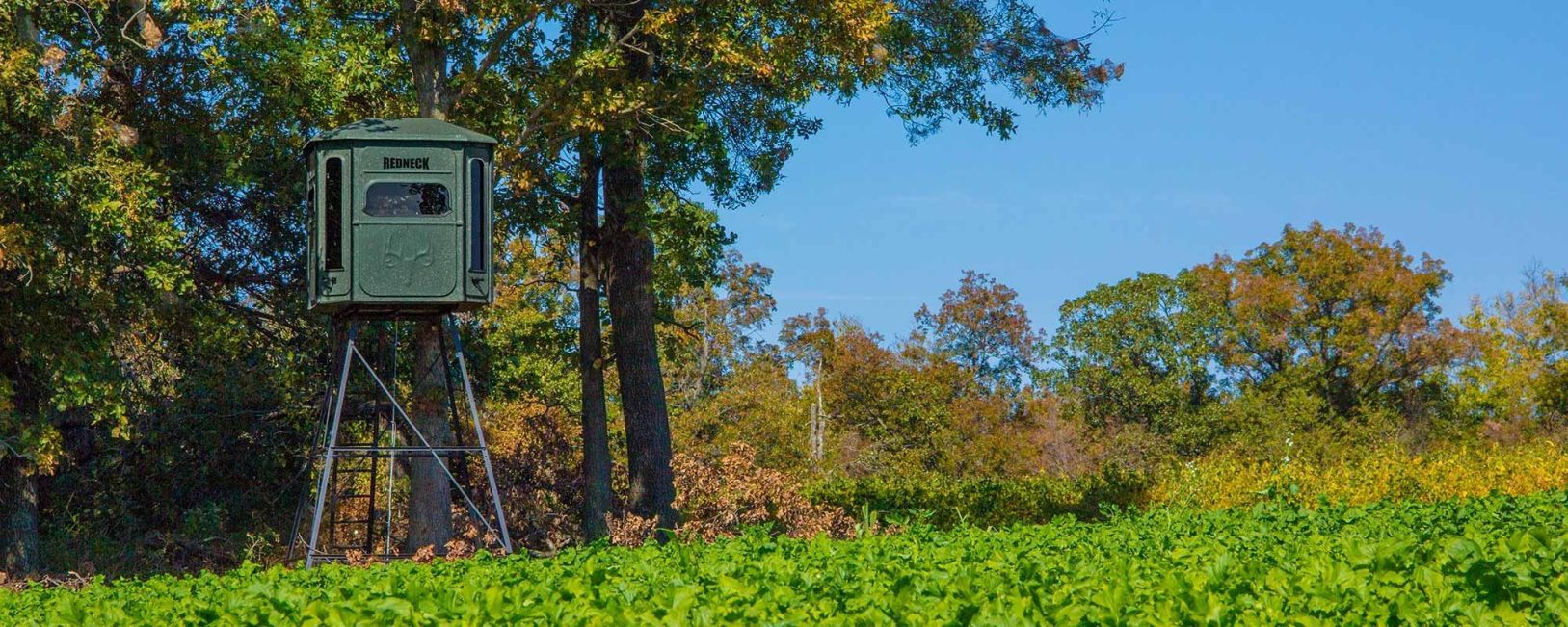
You’ve been on stand since dawn. By nine, your toes are numb. Then the buck you’ve patterned steps out of the cedars, and you’re too stiff to draw.
You’ve been on stand since dawn. By nine, your toes are numb. Then the buck you’ve patterned steps out of the cedars, and you’re too stiff to draw.
Cold shortens your sits and slows your hands when you need them most. And in Kentucky, where archery and crossbow seasons run into January, you’ll deal with it every winter.
An insulated hunting blind keeps most of that out. At R&M Fence, we help Northern Kentucky hunters pick and install blinds that hold heat. Walls only do part of the work, though, so we’ll cover clothing and tactics too.
An insulated hunting blind is a hard-sided blind with foam or similar insulation in the walls, ceiling, and floor, plus sealed windows and a sealed door, so it holds heat and blocks wind.
An insulated deer blind also muffles noise from inside and keeps more of your scent from leaking out.
Soft-sided pop-ups and bale blinds hide you well, but they insulate less in extreme cold. Portable insulated hunting blinds, including insulated pop-up ground blinds, narrow the gap without closing it.
Late season deer hunting punishes every weak point in your setup. When you sit in an insulated deer blind instead of a bare shell, three things change:
One catch: sealed, heated hunting blinds sweat, so crack a window or vent before condensation fogs the glass and soaks your gear.
Four things decide how much heat a hunting blind keeps.
Hard-sided blinds hold heat better than soft-sided ones.
A hard sided hunting blind (fiberglass, wood, or plastic) gives wind nowhere to push through, while fabric panels flex, flap, and leak. Add foam in the ceiling and floor, and a hard sided deer blind gives you the best shot at a comfortable December sit.
Here’s how the two compare:
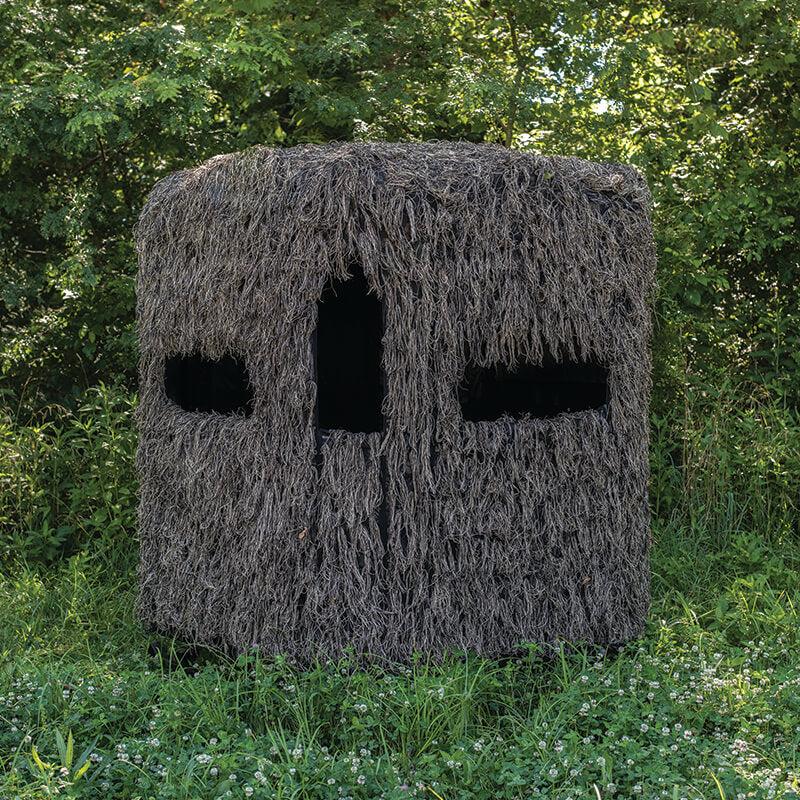
Portable insulated hunting blinds do exist, including insulated pop-ups that pack into a bag. They make sense if you move stands often. Still, in our experience, they don’t match a fiberglass box for blocking wind and holding heat.
So if you’re shopping for the best ground blind for cold weather, ask where the insulation sits. An insulated ground blind with foam only on the sidewalls will still leave your feet cold, and that trade-off decides how we rank the top ground blinds for hunting.
Heat rises and cold climbs up through the floor, so a blind needs insulation at both ends. The ceiling holds in the warmth you give off.
The floor, meanwhile, keeps frozen ground from pulling that warmth back out through your boots.
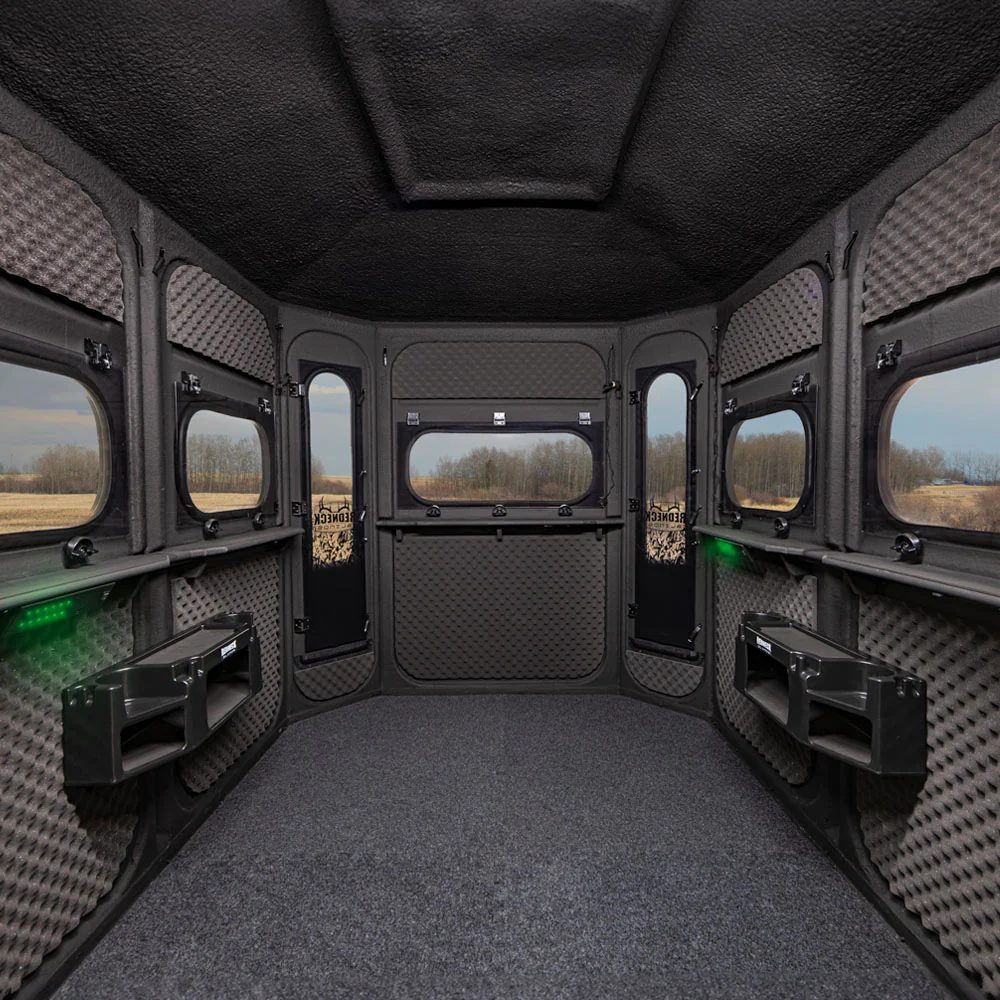
Redneck’s Platinum 360 line is a good example. Redneck describes a closed-cell foam insulated ceiling, acoustical foam-covered walls, and a high-density foam pad under a marine-carpeted floor. So when you compare any blind, ask where the foam is, because that answer separates the best hunting blinds from the ones that leave you shivering by noon.
Loose seals around windows and doors can undo good insulation. So look for tinted, tempered glass, quiet hinges, rubber window gaskets, and a door that closes against molding instead of a bare edge. A hard sided deer blind with tight gaskets also holds moisture and scent better.
Then, when it’s time to shoot, open a single window, ideally on the downwind side, and leave the rest shut. That way, you keep most of your heat and send less scent toward the deer.
A ground box blind is easier to keep warm because it sits out of the wind. An elevated blind catches more wind, but your scent stays off the ground, and your sight lines run longer.
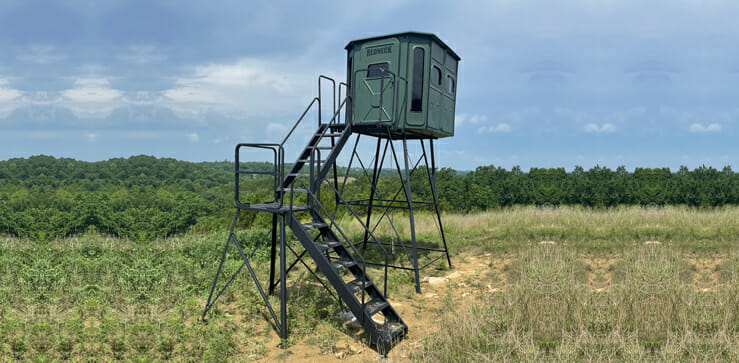
So for many hunters, the best ground blind for cold weather is an insulated box blind tucked behind a windbreak such as a tree line or fence row. Still, if you want height, we set up towers, trailers, and sleds.
You want to stay warm at dawn in late December.
As a Walton, KY dealer, we carry blinds for that: every blind below is a hard sided hunting blind with foam in the ceiling, walls, and floor. So, for the best insulated hunting blinds we offer, begin with our insulated fiberglass hunting blinds and these four Platinum 360 models:
| Model | Size | Good for |
|---|---|---|
| Game Changer Platinum 360° | 6×8 | Three to four adults |
| Big Country Platinum 360° | 6×7 | Three to four adults, or a family |
| Buck Palace Platinum 360° | 6×6 | Up to three adults, or two adults and two kids |
| Predator Platinum 360° | 5×6 | Up to two adults |
Beyond those four, we list the Solo Hunter, Twin Hunter and Stalker gun blind, so ask us how those are built before you count on them for a December sit.
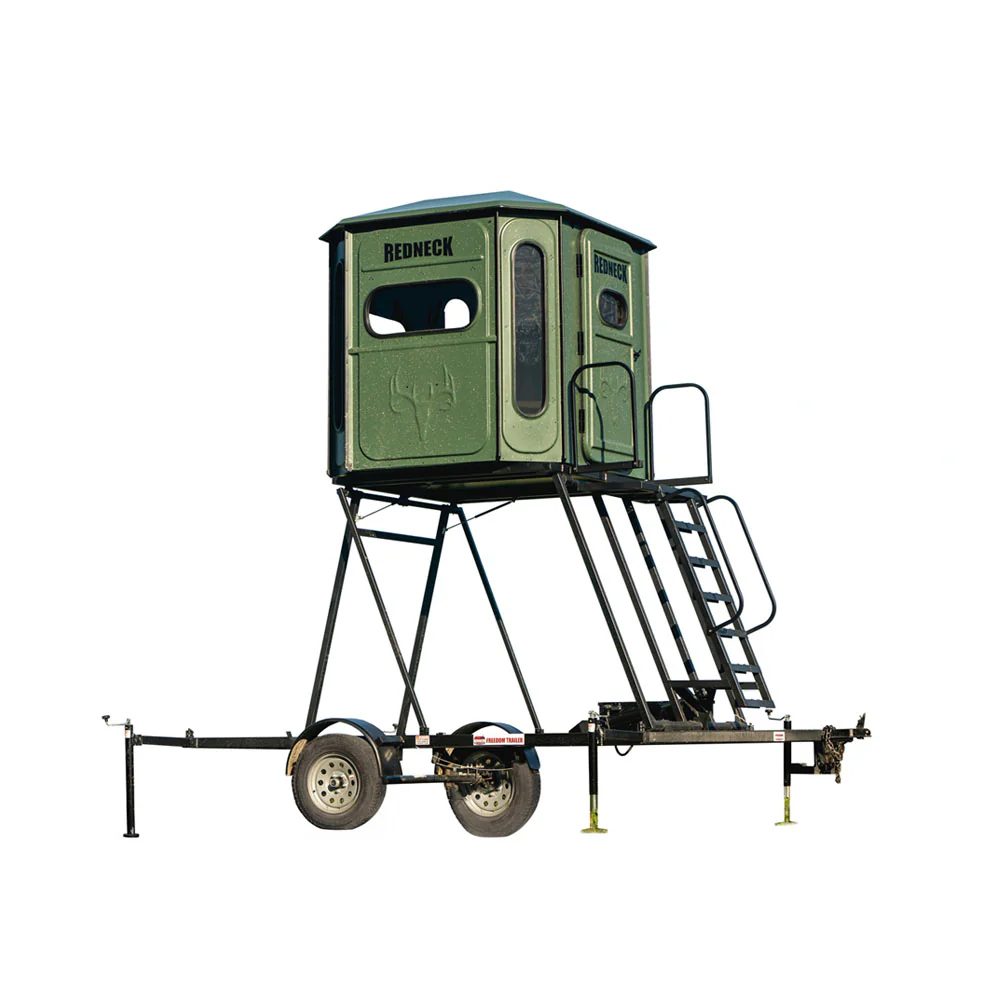
For stands, we offer 5-, 10-, and 15-foot towers, a hydraulic trailer, and blind sleds. Since not every stand fits every blind, we match them for you. We also deliver and install across Northern Kentucky, so you don’t have to rent equipment to set an insulated box blind that weighs hundreds of pounds.
You’ve probably read hunting blind heater advice on forums, and a lot of it runs wild. Worse, much of it skips the part that can kill you. Any heater that burns fuel makes carbon monoxide, so ventilation and a CO detector aren’t optional.
That’s why we won’t tell you any heater is safe in a hunting blind. It depends on the heater, the blind, and the air you let in. So the best heater for deer blind use is the one you can vent properly.
If you run a propane heater for deer blind sits, pick one rated for indoor use. Look for an oxygen depletion sensor, a tip-over shutoff, and the maker’s approval for small enclosures. The best heater for deer blind use has all three, but you still need a CO detector beside it.
Take the manual for one widely sold portable propane heater as an example. It lists small recreational enclosures such as porches, cabins, fishing huts, tents, and truck caps, each with a means of bringing in air. It also calls for vents of at least 9 square inches at both the ceiling and floor, and it says not to use the heater in an enclosure with no window or roof vent.
Hunting blinds aren’t on that manual’s list, though the maker’s product page names them as a use. So the same ventilation rules still apply.
You can’t smell carbon monoxide, so your body warns you. The CDC lists headache, dizziness, weakness, upset stomach, vomiting, chest pain, and confusion, often described as flu-like. So a headache in a blind with a heater running is the wrong moment to blame the flu.
So protect yourself:
Flameless options include heated seat pads, vests and gloves, plus battery or electric heaters if your blind has power. They put out less heat than a propane heater for deer blind use, but they make no fumes. Many hunters use them as the base layer and add a deer blind heater only on the coldest mornings.
Not buying new? Turning a plain box into an insulated box blind is a weekend project, and it works on any hard sided deer blind you already own:
If you’d rather skip the project, request a free estimate and we’ll talk through delivery and setup.
In cold weather deer hunting, plenty of hunters swear deer feed hard after a cold front, and you’ve probably timed a sit around one.
Still, the National Deer Association says the science doesn’t back that up, citing a Penn State study of seven deer that found no difference in speed or distance before, during, or after a front. So don’t count on the cold to do the work.
What does hold up is food and cover. The Pennsylvania Game Commission says to focus on food and cover, because female deer eat whatever they can find, including standing corn, waste grain, acorns and woody browse, to offset body weight lost fighting the cold. So the best late season deer hunting tips start with finding the food, then placing a warm blind where it makes sense.
Sweat is the enemy in cold-weather deer hunting. Walk in light, and layer up once you’re in the blind so sweat doesn’t soak your base layer. Pack hand and toe warmers.
According to Kentucky Fish and Wildlife’s deer hunting page, the 2026-2027 late seasons look like this:
Notice that muzzleloader week lands inside archery and crossbow season, so you’ll need hunter orange in your blind even if you hunt with a bow. The same goes for any adult sitting with a youth hunter on the free weekend, when kids can hunt without a license or deer permit. A warm blind helps if you’re bringing a kid.
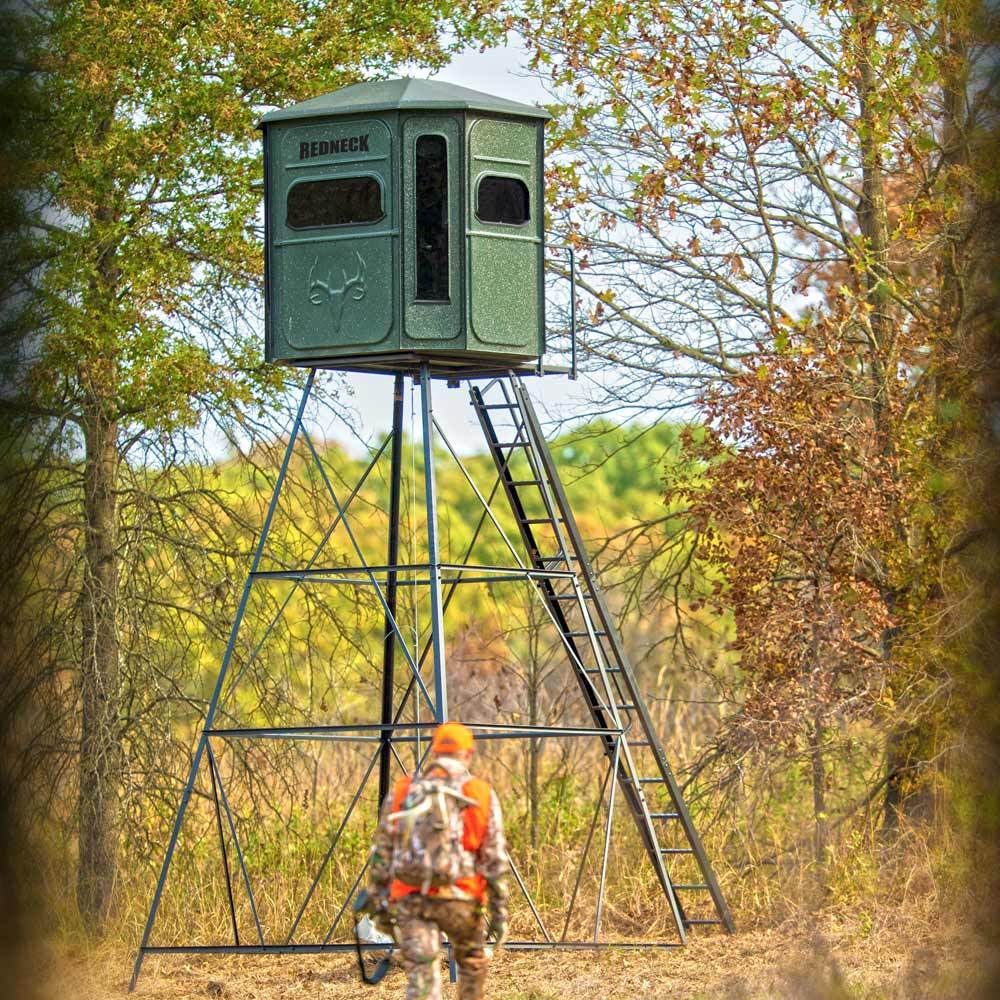
Hunter orange is required during the muzzleloader and youth firearm seasons. If you’re scouting public ground, our guide to Kentucky’s wildlife management areas is a good place to start.
Warm hunters stay put, and hunters who stay put see deer. Pick an insulated hunting blind with foam in the ceiling, walls, and floor, keep any heated hunting blind ventilated with a battery CO detector on hand, and use these late season deer hunting tips to sit where the food is.
To see insulated fiberglass hunting blinds in person, stop by R&M Fence in Walton, KY, or call 859-485-9198 to ask about delivery and setup.
Possibly. Deer have a strong sense of smell, and propane carries an added odorant called mercaptan. Light your hunting blind heater before the sit starts, keep the upwind window shut and play the wind the way you would for your own scent. Keep a heated hunting blind’s vents open for fresh air, though.
Only if it’s rated for indoor use and vented. One heater’s manual lists cabins, tents and fishing huts, not hunting blinds, and asks for 9 square inches of vent at ceiling and floor. With a propane heater for deer blind sits, keep a window or roof vent open and carry a battery CO detector.
Yes, especially for late season deer hunting. An insulated hunting blind gives you longer sits, quieter movement and better scent control in harsh weather. If you only hunt early season, you may not need one, and if you move stands often, portable insulated hunting blinds or an insulated ground blind may suit you better.
Line the walls and ceiling with rigid foam board, add carpet or foam mats to the floor, and weatherstrip the door and windows. Keep foam away from any heater, following its clearance distances, and leave a vent open for fresh air. Or buy an insulated hunting blind with foam already built in.
Choose the best heater for deer blind use by features. Look for an indoor rating, an oxygen depletion sensor that shuts the heater off if oxygen drops, a tip-over shutoff, the right size for your blind, and quiet operation. Whichever deer blind heater you pick, vent the blind and keep a battery CO detector.

Kentucky's Wildlife Management Areas (WMAs) represent some of the most pristine and carefully managed hunting grounds in the southeastern United States. These publicly accessible areas
Read More
Ask any seasoned hunter about their most memorable dawn, and you’ll hear tales of misty fields, watchful bucks, and that sudden rustle that gives everything away.
Read More
Ask any Kentucky hunter about their toughest season, and you’ll hear stories of freezing mornings, sudden rain, and that one old buck who seemed to spot every blind except the right one.
Read More